A model that scores 98% in testing and falls apart in production almost always has one cause: data leakage in machine learning let information into training that wouldn’t actually be available at prediction time.
What data leakage in machine learning actually means
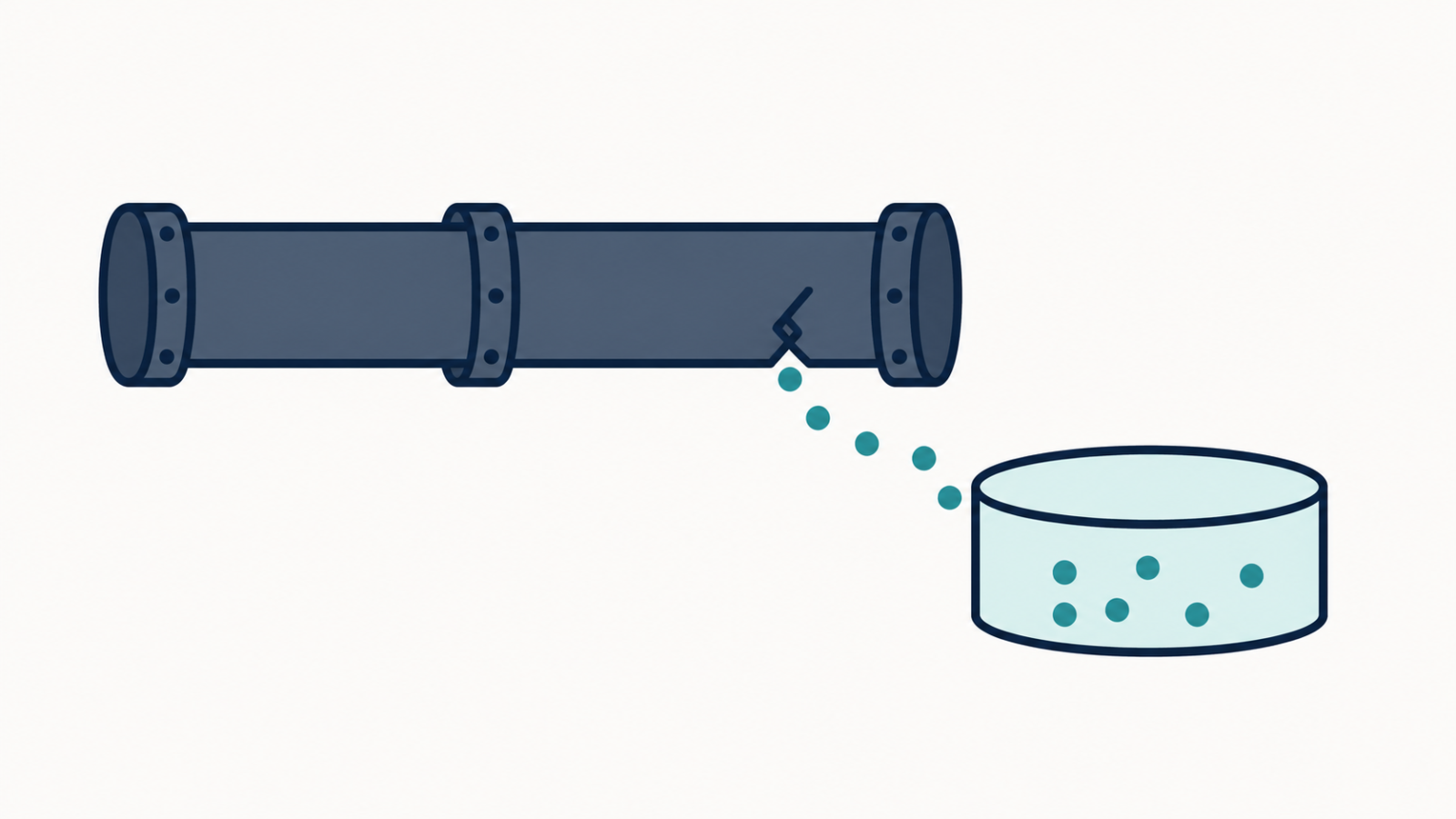
Data leakage in machine learning happens whenever information that wouldn’t be available at real prediction time sneaks into training or evaluation. The model isn’t cheating on purpose — it’s exploiting a shortcut a careless pipeline handed it, and that shortcut evaporates the moment the model faces genuinely new data.
The most common form: leaking the future into the past
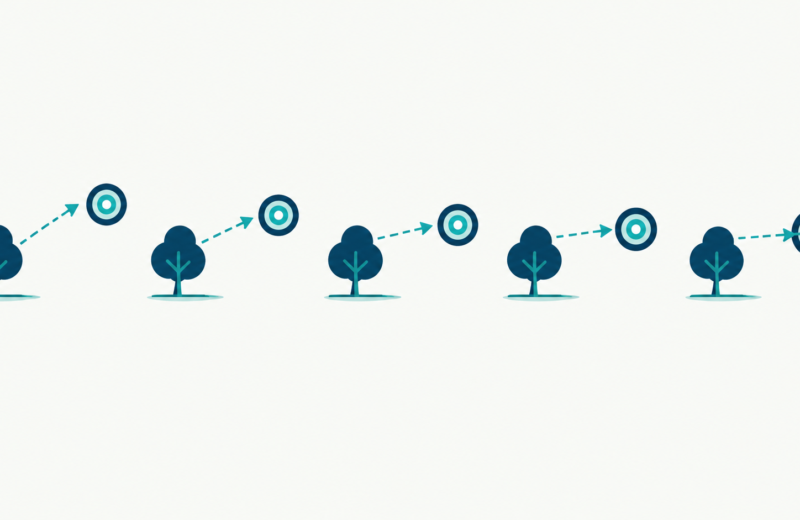
A random train/test split on time-ordered data lets the model train on dates after the ones it’s supposedly predicting — a textbook case of data leakage in machine learning that inflates accuracy in a way that never survives production. This is exactly why time series cross-validation exists: chronological splits are the direct fix for this specific leakage pattern, and the bike-share demand forecasting project uses exactly that discipline so its reported accuracy reflects what would actually happen in production, not an inflated number produced by peeking at the future.
Leakage through preprocessing done in the wrong order
Scaling, imputing missing values, or selecting features using statistics computed across the entire dataset — including the test set — is a quieter, easier-to-miss form of data leakage in machine learning. The fix is mechanical: fit any preprocessing step only on training data, then apply it to the test set, never the reverse.
Leakage through features that encode the label
Sometimes a feature is, functionally, a restated version of the target — a hospital “discharge date” field when predicting mortality, for instance. This kind of data leakage in machine learning produces a model that looks excellent and explains nothing, because it’s essentially been handed the answer. Catching it usually requires domain knowledge, not just statistics: a feature that correlates suspiciously perfectly with the target is worth investigating before it’s trusted.
How benchmarking against a baseline helps catch leakage
A model that dramatically outperforms a sensible baseline model is worth double-checking for leakage before celebrating. The fact-check triage NLP project benchmarks its results against published literature on the same LIAR dataset specifically so an unusually high score would stand out as suspicious rather than simply impressive — a result far outside what prior published work achieved on the same data is a leakage red flag, not automatically a breakthrough.
A quick checklist for catching data leakage
- Were any preprocessing steps (scaling, imputation, feature selection) fit on the full dataset instead of training data only?
- For time-ordered data, does your split respect chronological order, or was it shuffled randomly?
- Does any feature encode information that would only be known after the outcome you’re predicting?
- Does your result dramatically outperform a sensible baseline or published benchmark — and if so, have you specifically checked for leakage rather than assuming skill?
FAQ
Is data leakage the same thing as overfitting?
No — overfitting means a model memorizes training data noise. Data leakage means the model had access to information it shouldn’t have had at all, which is a data problem, not a model-complexity problem.
Can cross-validation alone prevent data leakage?
Not by itself — standard k-fold cross-validation can still leak if preprocessing is fit before the folds are split, or if the data is time-ordered and folds aren’t chronological.
What’s the fastest way to sanity-check for leakage?
Compare your result against a naive baseline. A gap that’s implausibly large for the problem is the most common tell that something upstream is leaking information it shouldn’t have.